No products in the cart.

01


Product Code: 0110001178
Availability:In stock
Please note: Tinyhawk Aero BNF does not include batteries and chargers.
Estimated shipping dates depend on the video system and motor option you select:
These are estimated shipping dates, not delivery dates. Timing may change. Please check your selected version before placing your preorder.
A closer look at the airframe, hardware and configurations.
Watch on YouTube ↗Hear directly from EMAX about what this first serious racing whoop means for the brand.
Watch on YouTube ↗65mm 1S BNF FPV racing whoop

Built light. Three motor options. Tinyhawk Aero is EMAX's first purpose-driven serious racing whoop: a fully ducted 65mm BNF platform with ExpressLRS 2.4GHz, a choice of Analog or HDZero video, and three motor options for freestyle control, race-day response or maximum thrust.
Three motor options // six total configurations
The same 65mm airframe is available with three distinct motor and propeller combinations. Every motor option is offered in both Analog and HDZero.

01 // Control
Smoother throttle resolution for technical proximity lines and efficient cruising.
02 // Lap time
The lightest build and a balanced step up in gate-to-gate response.
03 // Maximum attack
The highest-output configuration for aggressive throttle response and outright thrust.
Power // efficiency
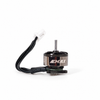
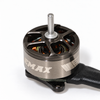
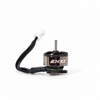
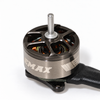
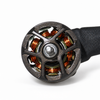
0702-series brushless motors, HQProp 31mm tri-blades and a 1S HV power system turn low weight into useful acceleration. Choose efficiency, racing balance or the 174g maximum-thrust Performance option.
Hover results are controlled benchmarks. Actual flight time varies with motor option, throttle use, battery condition, video system and environment.

Lightweight // rapid direction changes
Less mass means less inertia when the line demands an instant brake, snap or redirect. Tinyhawk Aero starts at approximately 16.3g in Analog and 18.8g in HDZero, without giving up full propeller ducts.

Flight systems // up close
Every Tinyhawk Aero includes ExpressLRS 2.4GHz control. The two electronics packages let pilots prioritize minimum analog weight or a compact HDZero digital FPV path.

Protection // recovery
A race whoop has to survive the line it attacks. Full-coverage ducts shield all four propellers, the tall canopy surrounds the FPV lens, and the compact layout keeps electronics close to the aircraft's center.
Tinyhawk Aero is designed for routine racing and proximity impacts; no lightweight FPV aircraft is indestructible.

EM2.0 connector // preserve the power path
Battery current reaches the ESC and all four motors through one connector. Under hard throttle, resistance in that path becomes voltage drop—so connector headroom matters most at the exact moment a racing whoop asks for maximum punch.
EM2.0's published ratings provide approximately 11% more continuous-current capacity and 33% more burst-current headroom than BT2.0's published 9A continuous and 15A burst ratings.
EMAX publishes the connector design package, STEP model and battery test document so manufacturers and pilots can inspect and adopt the standard.
Tinyhawk Aero was performance-tested around EM2.0. Keeping that connector preserves the tested electrical path; any conversion changes the system, so compare current rating and resistance alongside plug familiarity.

Current figures are published manufacturer ratings. Real voltage drop also depends on battery condition, wire gauge, soldering, contact wear and operating temperature.
Before you buy // BNF compatibility
Tinyhawk Aero specifications // all six versions
| Configuration | Video system | Motor | Propeller | Dry weight | Max combined thrust | Hover benchmark |
|---|---|---|---|---|---|---|
| Freestyle Analog | 5.8GHz Analog | 0702B 27,000KV | HQProp 31mm, 1.2×1.1×3 | Approx. 16.4g | 142g | Approx. 5:03 |
| Freestyle HDZero | HDZero | 0702B 27,000KV | HQProp 31mm, 1.2×1.1×3 | Approx. 18.9g | 142g | Approx. 3:17 |
| Racing Analog | 5.8GHz Analog | 0702B 30,000KV | HQProp 31mm, 1.2×0.9×3 | Approx. 16.3g | 147.6g | Approx. 5:07 |
| Racing HDZero | HDZero | 0702B 30,000KV | HQProp 31mm, 1.2×0.9×3 | Approx. 18.8g | 147.6g | Approx. 3:10 |
| Performance Analog | 5.8GHz Analog | 0702 35,000KV | HQProp 31mm, 1.2×0.9×3 | Approx. 16.9g | 174g | Approx. 4:48 |
| Performance HDZero | HDZero | 0702 35,000KV | HQProp 31mm, 1.2×0.9×3 | Approx. 19.3g | 174g | Approx. 2:54 |
Dry weights exclude the battery. Hover figures are controlled full-charge test results; real flight time varies. VTX output must comply with local laws and operating conditions.
Buyer questions // answered
No. Tinyhawk Aero is a BNF racing whoop, so you need a compatible ExpressLRS 2.4GHz transmitter, matching FPV goggles or receiver, and a charged 1S HV battery. Bind and verify controls before flight.
Choose the version that matches your existing goggles. Analog is the lightest option and works with standard 5.8GHz analog receivers. HDZero provides a digital FPV path for HDZero-compatible equipment.
Freestyle 27,000KV emphasizes smooth control, Racing 30,000KV balances light weight with quicker response, and Performance 35,000KV delivers the highest listed thrust. Every motor option is available in Analog and HDZero.
The recommended battery is a 1S HV 320mAh pack with an EM2.0 connector. A battery is not listed as included with the BNF aircraft.
EM2.0 provides published ratings of 10A continuous, 20A burst and 12.5mΩ internal resistance, giving the Aero power system additional current headroom during high-load throttle events. It is also an open-source design published by EMAX on GitHub. Changing connectors changes the electrical path used for the published Aero performance tests.
Yes. Tinyhawk Aero is purpose-built as a racing whoop. Its 65mm ducted frame, low mass, three motor options and dedicated Racing configuration make it EMAX's most focused tiny-whoop racing platform, while the Freestyle and Performance options provide different power characteristics.
No. The listed times are hover benchmarks from controlled testing. Actual flight time changes with throttle use, battery condition, motor option, video system, RF settings and environment.